

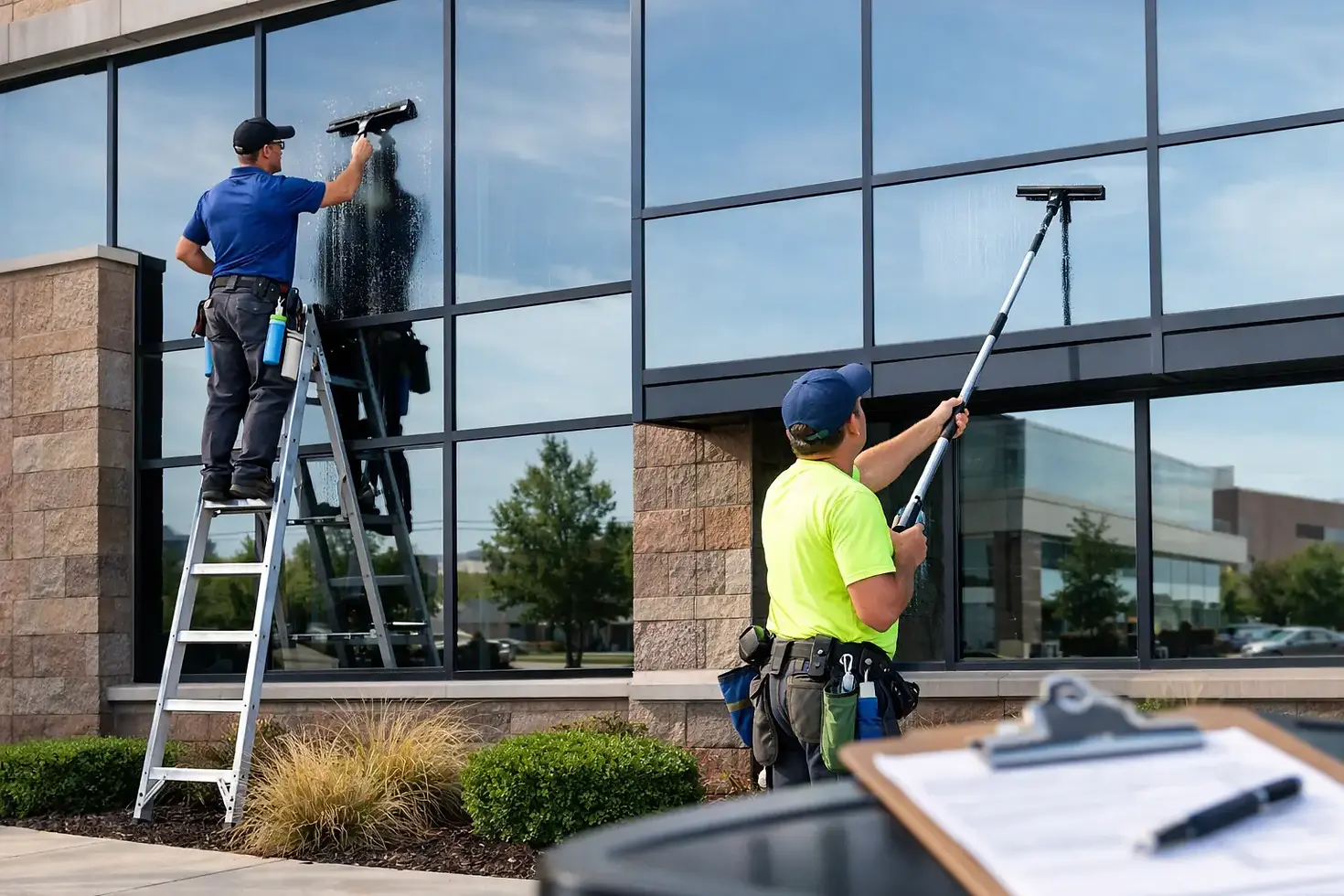
Guide to Window Cleaning Contracts for Businesses
A clean storefront or office exterior should not depend on last-minute calls when the glass starts showing fingerprints, water spots, and dust. A well-written agreement gives property managers a predictable standard, a dependable schedule, and a clear answer when conditions change. This guide to window cleaning contracts explains what business owners and facility managers should expect before approving recurring service.
Start With a Clear Scope of Work
The most useful contract answers a basic question without room for assumptions: what exactly will be cleaned? “Window cleaning” can mean exterior glass only, interior and exterior glass, frames, sills, tracks, entry doors, glass partitions, or a combination of those items. If the scope is not specific, two parties can leave the agreement with different expectations.
For a commercial property, identify the building areas included in the service. That may include the main entrance, street-facing windows, rear doors, office glass, lobby glass, or windows on upper levels of a low-rise building. The contract should also state whether service covers one building, multiple suites, or additional structures on the property.
Detail matters because different surfaces require different labor. Routine cleaning removes everyday dirt and buildup. Post-construction cleanup may involve paint, adhesive, silicone, drywall dust, or construction debris. Mineral stain removal and scratch repair are specialized services and should be listed separately rather than assumed to be part of standard maintenance.
Define the Result, Not Just the Task
A strong scope of work describes the expected finish. For most maintained commercial glass, that means streak-free windows with visible dirt, smudges, and ordinary buildup removed. It should also explain reasonable limitations. Existing scratches, failed window seals, permanent etching, hard-water damage, or glass defects cannot always be corrected through routine washing.
This protects both sides. The property manager knows what quality to expect, and the cleaning company can point out pre-existing conditions before work begins. A quick walkthrough and documented notes are especially helpful when a property has neglected glass or has recently completed renovations.
Set a Schedule That Matches the Property
Window cleaning frequency should match the building’s exposure, traffic, and appearance standards. A busy retail entrance may need frequent glass cleaning to keep doors and front windows presentable. A professional office with less public traffic may follow a monthly, quarterly, or seasonal maintenance plan.
There is no single correct schedule. Properties near active construction, high-traffic roads, landscaping, irrigation overspray, or areas with hard-water exposure often need more attention. In Tulsa and surrounding communities, spring pollen, summer dust, storms, and mineral-heavy sprinkler water can change how long glass stays clean.
The agreement should state the planned service interval and how scheduling works. For example, a contract may provide service every four weeks, once per quarter, or on an agreed rotating schedule. It should also say whether the provider will contact the site representative before arrival, what arrival window to expect, and who can authorize extra work when needed.
Plan for Weather and Access Changes
Weather delays are normal in exterior maintenance. Rain alone does not always prevent window cleaning, but lightning, high winds, freezing conditions, or unsafe surfaces can. A practical contract gives the service provider authority to reschedule work when conditions are unsafe, with service completed at the next reasonable opening.
Access is just as important. Gates may be locked, parking areas may be full, entryways may be blocked, or a tenant may be holding an event. State who is responsible for providing access and how missed appointments are handled. A clear policy prevents unnecessary charges and frustration when a crew arrives ready to work but cannot reach the glass.
Make Pricing Easy to Understand
A contract should show whether pricing is per visit, monthly, quarterly, or based on another billing arrangement. For recurring service, a fixed per-visit rate is often easiest for budgeting. It gives the client a known maintenance cost and helps the contractor schedule labor consistently.
The price should match the scope, frequency, access requirements, and condition of the windows. A building with simple ground-level glass will price differently than a two- or three-story property with difficult access, extensive glass, or specialized cleaning needs. The lowest quote is not always the lowest long-term cost if it leaves out important work, uses unclear terms, or produces inconsistent results.
Ask that the contract identify services that carry an added charge. Common examples include post-construction cleanup, removal of paint or adhesive, hard-water stain treatment, scratch repair, pressure washing, and work requested outside the regular route. This does not mean every extra needs a lengthy amendment. It means the approval process and pricing method are clear before the work happens.
Address Price Changes Directly
Recurring agreements should explain when pricing can be reviewed. Contract rates may need adjustment when the scope grows, access changes, the condition of the glass declines significantly, or the service schedule changes. The key is advance communication.
A dependable provider does not surprise a client with unexplained fees. Likewise, a client should not expect additional labor-intensive work to be absorbed into a routine maintenance rate. Written approval for changes keeps the relationship professional and straightforward.
Put Safety and Insurance in Writing
Commercial clients have a responsibility to select vendors who work safely around employees, visitors, vehicles, and building operations. Your window cleaning contract should confirm that the provider carries appropriate insurance and follows safe work practices for the property type and height involved.
The agreement should identify any site rules the cleaning crew must follow, such as check-in procedures, parking restrictions, restricted areas, security protocols, or required coordination with building staff. If work needs to happen outside normal business hours to avoid disrupting customers or employees, include that expectation in the service plan.
Safety also affects what is possible. Some windows may be inaccessible without specialized equipment, while certain areas may require the property to clear obstacles or provide an escort. Addressing those details before the first service helps the crew work efficiently without cutting corners.
Include Quality Control and Communication Standards
Good contracts do more than set a date and price. They establish how quality will be checked and what happens if there is a concern. The contract can name a primary contact for the property and a contact for the cleaning company. It can also set a reasonable timeframe for reporting missed areas or service concerns.
For routine work, a simple post-service notice may be enough. On larger properties or post-construction projects, a walkthrough may be the better choice. Either approach gives the client a clear opportunity to confirm that the work meets the agreed scope.
If a concern is reported, the contract should allow the provider a fair opportunity to inspect and correct it. Most service issues are resolved quickly when the report is specific: which window, what condition remains, and when it was noticed. Clear communication is more effective than vague complaints after several weeks have passed.
Review Contract Length and Cancellation Terms
Maintenance contracts can run month to month, for a fixed term, or under an annual agreement with scheduled service dates. The right choice depends on the property’s needs. Month-to-month terms offer flexibility, while a longer agreement may make planning and consistent service easier for both parties.
Read the cancellation language before signing. A fair agreement explains the required notice period, how already scheduled work is handled, and whether there are any early termination charges. It should also explain what happens if the property changes ownership, a tenant vacates, or the scope is reduced.
Avoid contracts that are vague about renewal. If the agreement renews automatically, the date and notice requirements should be easy to find. No one should have to search through fine print to understand their service commitment.
Use the Contract to Build a Better Maintenance Plan
The best window cleaning contracts are practical working documents, not paperwork that gets filed away and forgotten. Review the agreement after the first few visits. If the schedule is too frequent, not frequent enough, or missing areas that affect the property’s appearance, make an adjustment while the details are fresh.
Elite Window Washing works with commercial clients who need clear expectations, professional workmanship, and service they can count on. A free estimate is a good time to walk the property, discuss maintenance priorities, and put the right details in writing. When the contract reflects how your building actually operates, clean glass becomes one less maintenance issue competing for your attention.


