

How to Maintain Storefront Glass Without Streaks
A clean storefront tells customers that the details matter before they ever walk through the door. Learning how to maintain storefront glass is not just about wiping away fingerprints. It is about protecting the glass, preventing permanent stains, and keeping your business looking professional every day.
For Tulsa-area businesses, glass takes a steady beating from windblown dust, pollen, rain, hard-water minerals, and traffic film. Waiting until the windows look obviously dirty usually means more labor, tougher cleanup, and a less polished appearance in the meantime. A consistent plan keeps the job manageable and delivers the streak-free results customers notice.
Set a Storefront Glass Maintenance Schedule
The right schedule depends on your location, building exposure, customer traffic, and the type of business you operate. A storefront facing a busy road or parking lot will collect more dust and exhaust residue than one in a sheltered area. Glass near landscaping may need extra attention during pollen season, while entry doors can show handprints within hours.
For most customer-facing businesses, the entry glass and door panels should receive a quick wipe-down daily or as needed. This is especially true for handles, push plates, and lower sections of glass that customers and staff touch frequently. A more complete cleaning of the storefront should happen weekly or biweekly, depending on conditions.
Exterior professional cleaning generally works best on a recurring schedule. Monthly service can be enough for many offices and retail locations, while properties with heavier exposure may benefit from service every two weeks. The goal is not to clean more often than necessary. It is to prevent soil, mineral deposits, and airborne contaminants from bonding to the glass.
Use the Right Method to Maintain Storefront Glass
Storefront glass is easy to damage with the wrong tools or chemicals. Paper towels can leave lint and often spread residue rather than removing it. Abrasive pads, dirty rags, and dry scraping can leave fine scratches that become more visible in direct sunlight.
For routine touch-ups, use a clean microfiber cloth and a glass-safe cleaner. Spray the cloth rather than soaking the glass, particularly around door hardware, seals, and frames. This limits drips and prevents cleaner from collecting in tracks or around metal components.
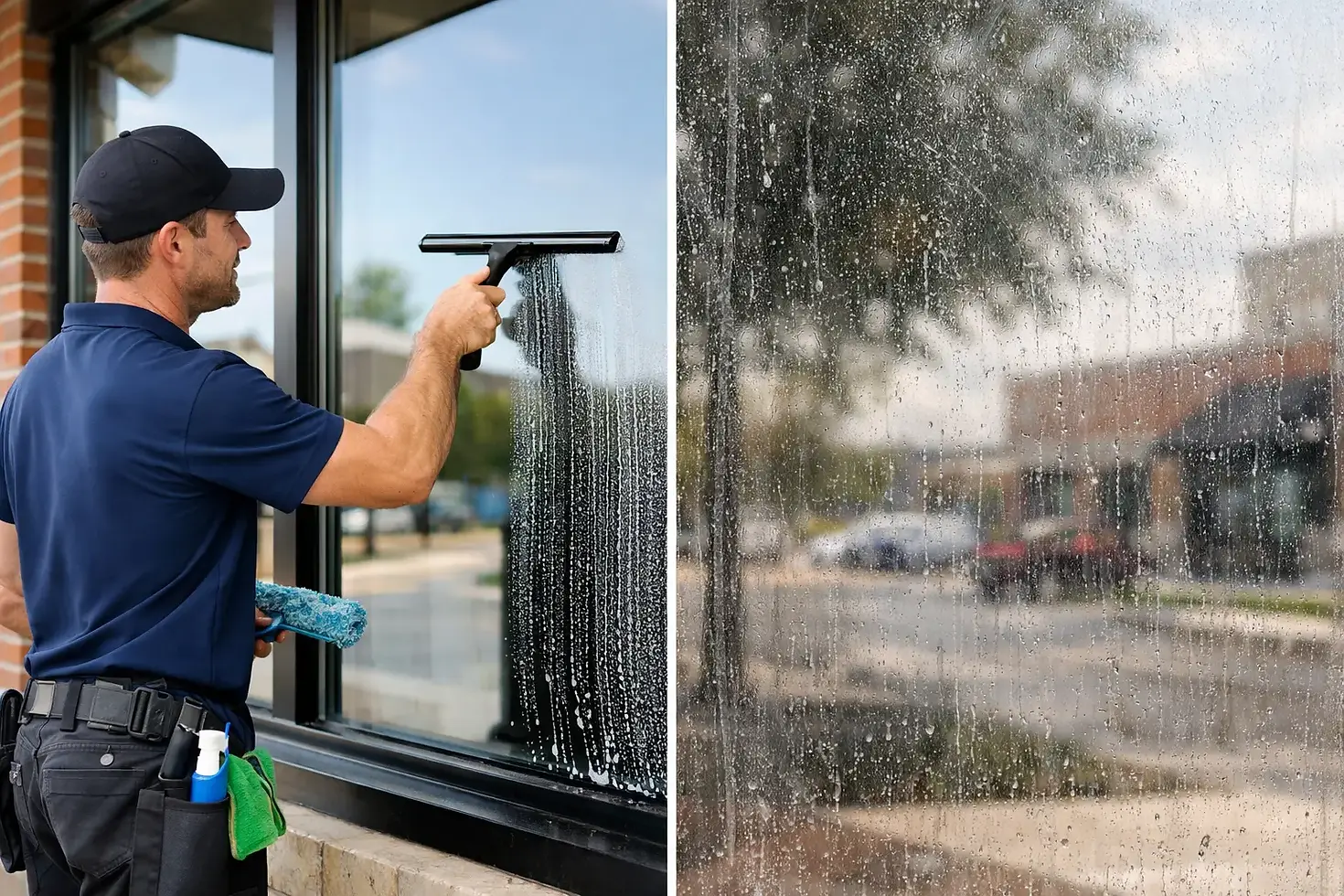
For a full cleaning, professional-grade glass solution, a clean applicator, and a quality squeegee produce the most consistent finish. Wash the glass to loosen soil, then remove the solution with smooth, overlapping squeegee passes. Wipe the blade edge between passes and detail the perimeter with a dry microfiber towel. The difference between a clear window and a streak-free one often comes down to clean tools and a controlled final wipe.
Avoid cleaning glass in direct, hot sunlight when possible. Cleaner can dry before it is removed, leaving streaks and water spots behind. Early morning, later afternoon, or shaded sections of the building are usually better times to work.
Check Coatings, Film, and Glass Condition First
Not every pane should be cleaned the same way. Tinted glass, protective film, decorative finishes, and certain coated glass products can have manufacturer-specific cleaning requirements. Strong solvents, ammonia-based products, or rough tools may damage the finish or affect its appearance.
When you are unsure what type of glass or film is installed, test a small, less visible area first. This is particularly important after a renovation, tenant turnover, or storefront update. A little caution costs far less than replacing damaged glass or film.
Prevent Hard-Water Stains Before They Set
Hard-water spotting is one of the most common storefront glass problems. It occurs when sprinkler overspray, rain runoff, or standing water dries on the surface and leaves mineral deposits behind. Over time, those deposits can etch the glass. At that point, regular cleaning may not remove the marks.
Look for the source instead of repeatedly cleaning the symptom. Adjust sprinkler heads so they do not spray windows. Check gutters, awnings, and roof drainage for runoff that hits the glass. If outdoor planters are watered near the storefront, make sure water is directed away from the building.
Fresh mineral spotting is easier to remove than old buildup, so do not let it sit for months. If you see cloudy white spots that remain after normal cleaning, stop using aggressive DIY methods. Acidic cleaners and abrasive products can create more damage when used incorrectly. Professional stain removal can determine whether the deposits can be safely lifted or whether the glass has already been etched.
Keep Frames, Sills, and Tracks Clean Too
Customers see the whole storefront, not just the center of the glass. Dirty frames and debris-filled tracks can make freshly washed windows look unfinished. They also hold moisture, dust, and organic material against the glass and seals.
During regular maintenance, wipe down frames and door rails with a cleaner that is safe for the material. Vacuum or brush loose dirt from tracks before wiping them out. Pay close attention to lower corners and drain openings, where dirt and water tend to collect.
Do not use pressure washing directly on window seals, door thresholds, or gaps around the frame. Excessive pressure can force water into areas where it does not belong. When exterior pressure washing is needed around the storefront, it should be performed with the right distance, angle, and technique to protect surrounding glass and building materials.
Watch for Damage That Cleaning Will Not Fix
A maintenance routine should include a quick visual inspection. Look for scratches, chips, cracked sealant, cloudy areas between panes, loose weatherstripping, and signs of water intrusion. These issues can affect appearance, energy efficiency, and long-term glass performance.
Post-construction cleanup deserves special attention. Paint overspray, mortar, silicone, adhesive, and concrete dust can bond to glass. Removing them without the proper process can scratch the surface, especially if construction debris is dragged across a dry pane. A professional cleanup team can assess the debris, use the appropriate removal method, and document pre-existing damage when needed.
If scratches are noticeable but the glass is otherwise sound, professional scratch repair may be an option. Results depend on the depth, location, and type of damage. Deep scratches near eye level or across a large visible area may require replacement, while lighter surface scratches can sometimes be improved without replacing the pane.
Train Staff for Simple Daily Care
Your staff does not need to perform full window cleaning, but a few consistent habits protect the storefront between professional visits. Keep clean microfiber cloths on hand for fingerprints and smudges. Use designated cloths for glass only, since towels used on counters or exterior surfaces may carry grit that can scratch.
Encourage staff to report recurring spots, leaks, damaged seals, or unusual haze on the glass. Those details help identify underlying issues early. A recurring white stain near one corner, for example, may point to irrigation overspray or a drainage problem that needs correction.
It also helps to avoid taping signs directly to glass whenever possible. Tape adhesive can leave residue, and repeated removal can create a patchy look. If temporary notices must be posted, remove them promptly and clean the area with a glass-safe adhesive remover approved for the specific glass or film.
When Professional Storefront Glass Care Makes Sense
Routine staff touch-ups keep your entry looking presentable, but professional service provides a deeper, more consistent result. A trained window cleaning crew brings the right tools, safe access methods, and experience to address grime, water spots, construction residue, and difficult exterior exposure without creating scratches or streaks.
A recurring maintenance program also removes one more task from the facility manager's list. Service can be scheduled around operating hours, customer traffic, and the needs of your property. For businesses in Tulsa, Broken Arrow, Bixby, Glenpool, and Sand Springs, Elite Window Washing provides dependable storefront care built around clear communication and quality workmanship.
The best storefront glass maintenance plan is one your team can actually keep up with. Handle fingerprints and small messes promptly, correct water sources before they create stains, and bring in professional help before buildup becomes permanent damage. Clean glass does more than improve the view. It gives every customer a better first impression of the business behind it.


